There are few places in Poland where you can walk through a city park and, within minutes, be standing beside rocks formed in a warm tropical sea hundreds of millions of years ago.
Kadzielnia is one of those places.
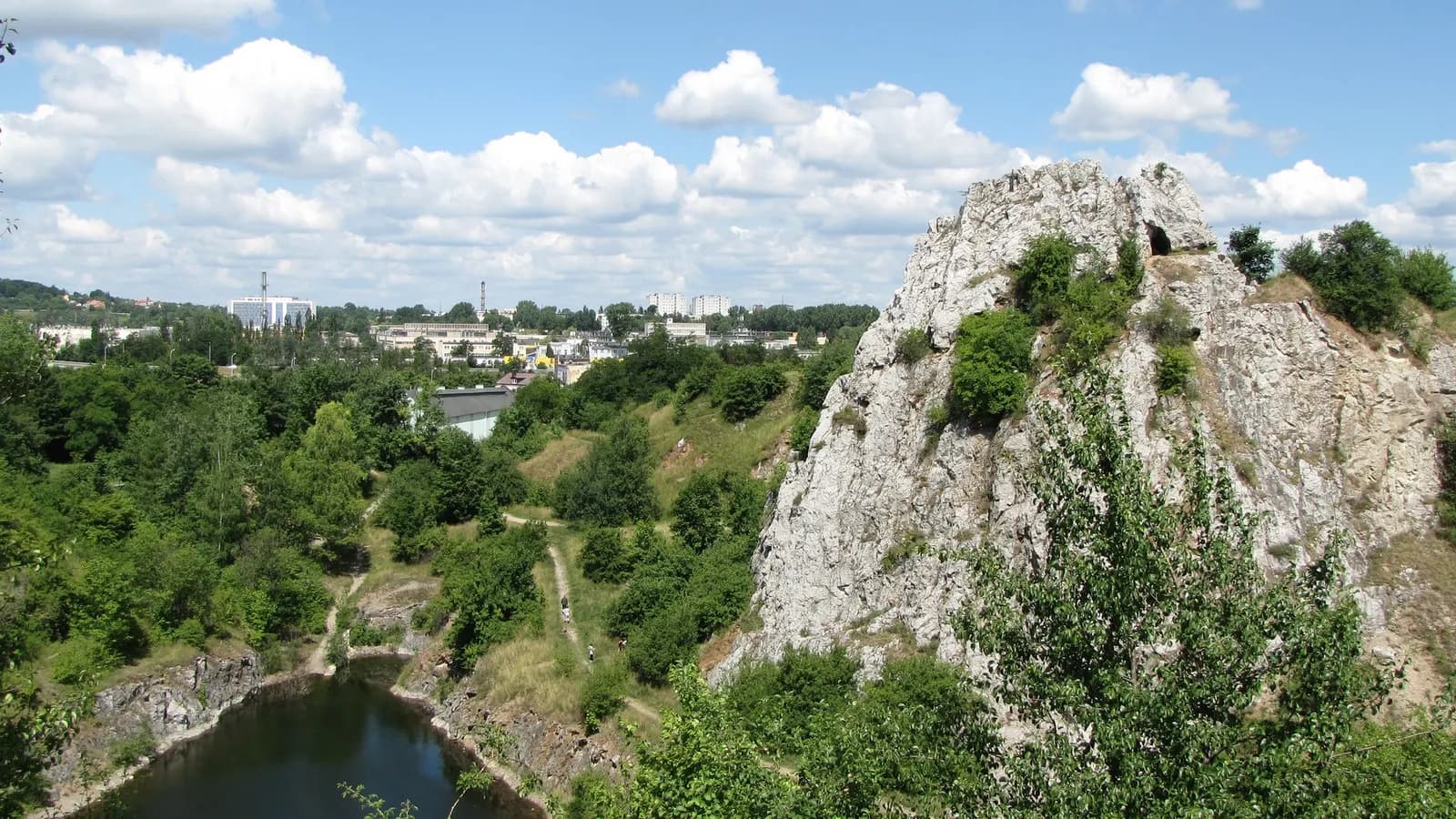
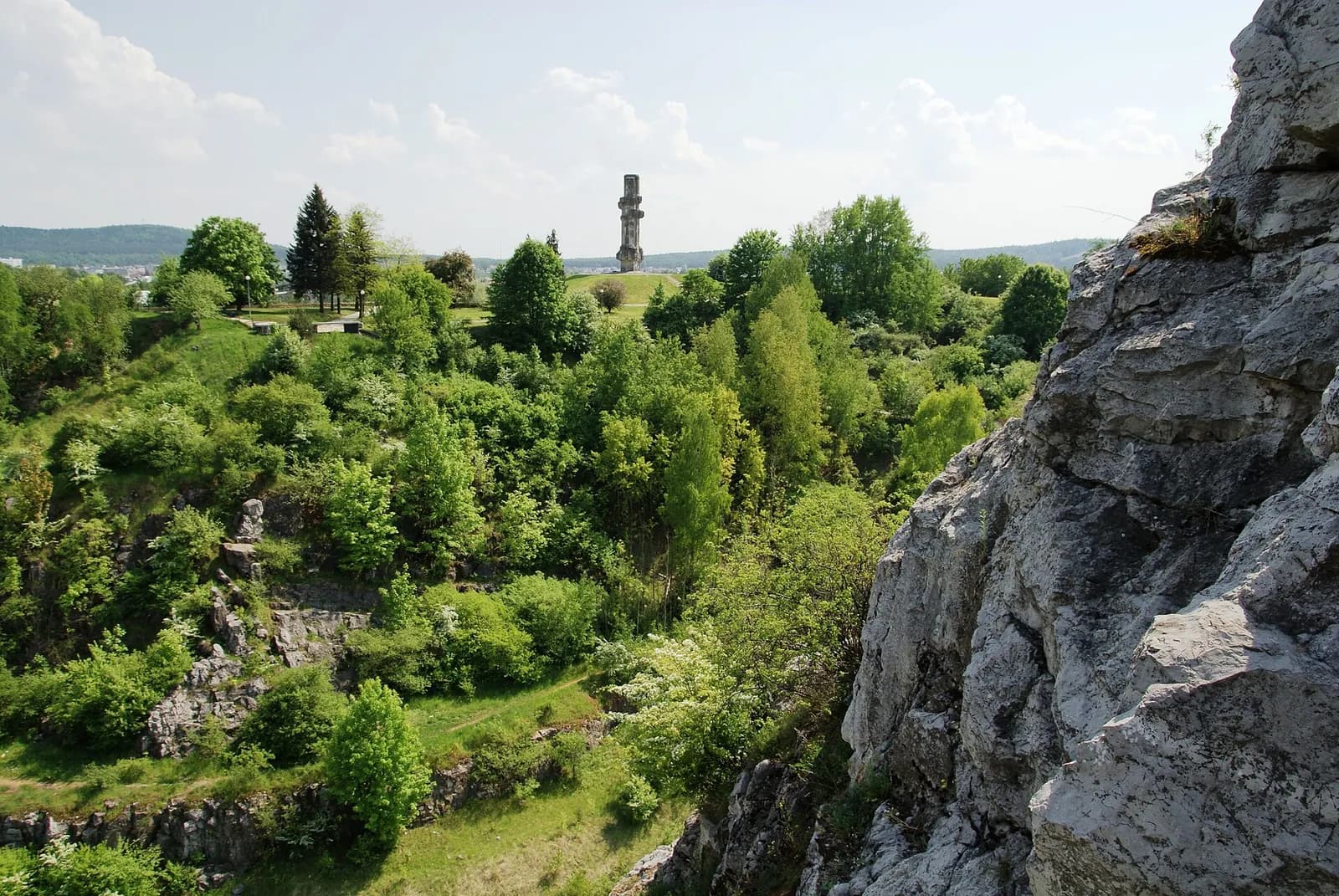
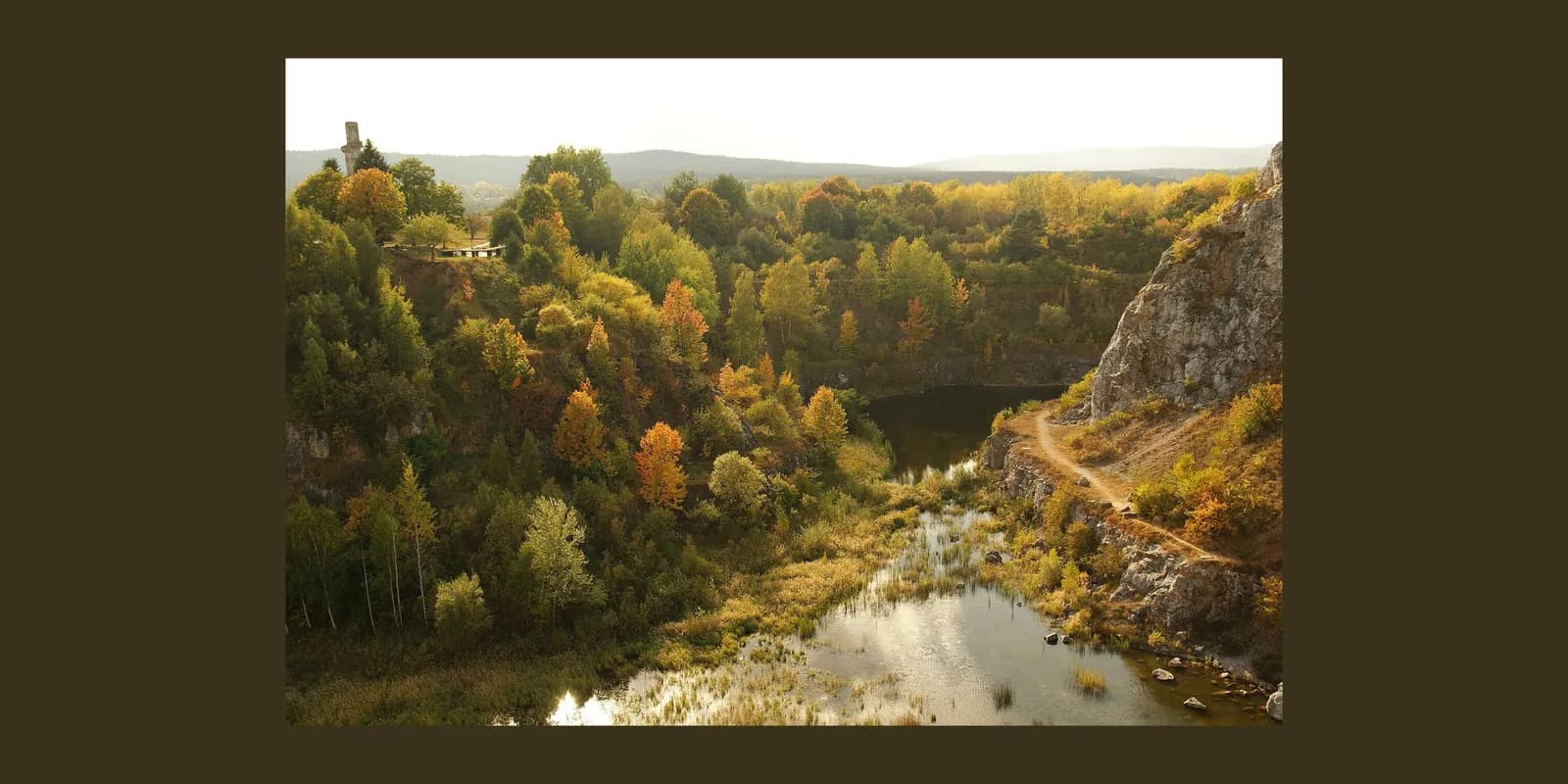
The former quarry in the centre of Kielce has become one of the city's best-known landmarks, combining dramatic limestone cliffs, caves, walking paths, geological discoveries and the distinctive Kadzielnia Amphitheatre. At its centre stands Skałka Geologów, the Geologists' Rock, protected as the Kadzielnia Nature Reserve.
For anyone wanting to understand the geological character of Kielce and the wider Świętokrzyskie region, this is a good place to begin.
From Ancient Sea to City Landmark
The story of Kadzielnia begins long before Kielce existed.
The limestone exposed here was formed during the Devonian Period, when this part of Poland lay beneath a warm, shallow sea. The rocks preserve evidence of ancient marine ecosystems, including corals and stromatoporoids that helped build reef environments. The geology of the Kadzielnia area is part of the remarkable Devonian heritage of the Świętokrzyskie Mountains.
The layers visible today are therefore a reminder of a landscape that would have been almost impossible to recognise. There were no forests, roads or buildings, only a marine environment populated by creatures that disappeared long before the first humans appeared.
Kadzielnia brings that distant history remarkably close. The rock faces of the former quarry expose part of the geological record directly beside the modern city.
A Quarry Shaped the Landscape
The Kadzielnia that visitors see today is also the result of centuries of human activity.
Limestone was quarried here for local industry, leaving behind the large excavation and steep rock walls that now define the site. When extraction eventually ended, the former industrial landscape began to take on a new role.
Today, traces of the quarry remain clearly visible. The contrast is striking: a place once associated with extracting stone has become one of Kielce's most popular areas for walking, sightseeing, education and cultural events. The city describes Kadzielnia as a former quarry that has been transformed into a major attraction and recreational space.
It is this combination of geology and industrial history that gives the landscape much of its character.
The Geologists' Rock
In the middle of the former quarry is Skałka Geologów, a prominent limestone outcrop rising above the surrounding landscape.
This is the part that has legal protection as the Kadzielnia Nature Reserve. The reserve was established in 1962 and covers around 0.6 hectares. It protects the highest part of the rocky outcrop, together with its geological features.
The reserve is not the same thing as the whole of Kadzielnia Park. This distinction is worth remembering when exploring the area. The wider park contains the paths, viewpoints, amphitheatre and visitor attractions, while the protected reserve itself covers the particularly valuable geological formation around Skałka Geologów.
The protected area is not open for unrestricted exploration, so visitors should stick to designated routes and respect the conservation rules.
Look Closely at the Rocks
Kadzielnia rewards visitors who slow down.
The large limestone walls are impressive from a distance, but the details tell a more interesting story. The rocks contain fossils and geological structures dating back hundreds of millions of years, when marine life occupied the shallow seas of the Devonian.
The surrounding Świętokrzyskie Mountains are particularly important for Devonian geology. Research by the Polish Geological Institute describes the Kadzielnia, Chęciny and Zelejowa limestone ranges as having formed in warm, shallow tropical seas, where reef ecosystems developed.
For visitors, this means that an ordinary walk can become an informal lesson in the history of the Earth. The cliffs are not simply scenery. They are part of the geological record.
Beneath the Quarry
The story continues underground.
Kadzielnia is one of the best-known cave areas in the Świętokrzyskie region, with around 25 caves recorded in the area. Three of them form the underground tourist route: Odkrywców, Prochownia and Szczelina.
The route allows visitors to see the limestone from a completely different perspective, moving from the open quarry into the underground spaces created by natural geological processes.
The caves are part of the same landscape that can be seen above ground, where water acting on soluble limestone has created cavities and karst features over time.
The underground route is a reminder that much of Kadzielnia's story is hidden beneath the paths and viewpoints that most visitors see first.
A Stage Among the Rocks
Then there is the Kadzielnia Amphitheatre.
Built into the southern part of the former quarry, the amphitheatre has become one of the most recognisable cultural venues in Kielce. Its setting is difficult to replicate elsewhere, with the limestone landscape forming a natural backdrop to concerts, performances and major events.
The amphitheatre dates from 1971 and underwent a major reconstruction in 2010. The venue can accommodate around 5,500 spectators.
This unusual combination of geology and culture is one of Kadzielnia's defining features. During the day, visitors may be examining fossil-bearing limestone or walking along the quarry walls. At other times, thousands of people gather in the same landscape for a concert or performance.
Part of Kielce's Geological Landscape
Kadzielnia does not stand alone.
Kielce has four geological nature reserves: Kadzielnia, Wietrznia, Ślichowice and Biesak-Białogon, as well as the landscape reserve at Karczówka. Together, they form an unusually rich collection of geological sites within and around the city.
The city's geological heritage is also connected with the Świętokrzyski Geopark, which belongs to the UNESCO Global Geoparks network.
For visitors staying in Kielce for more than a day, Kadzielnia can therefore be the starting point for exploring a much larger geological story.
Taking Care of Kadzielnia
The popularity of the site also makes responsible tourism important.
The most visually impressive parts of Kadzielnia can give the impression of a place designed for climbing and unrestricted exploration, but the geological reserve is protected precisely because of the value of its natural features.
Visitors should remain on designated paths, avoid entering restricted areas and follow current instructions around the caves and protected rock formations. The aim is straightforward: enjoy the landscape without damaging the features that make it special.
A Walk Through Deep Time
Kadzielnia works because its different stories sit naturally alongside one another.
There is the ancient sea preserved in the limestone. There is the quarry created by generations of human activity. There are caves beneath the ground, a modern amphitheatre among the cliffs and paths used every day by people living in Kielce.
Few city attractions offer such a direct sense of geological time. Stand beside the Geologists' Rock and the city is still there around you, but the rocks tell a much older story. Long before Kielce had streets, homes or a name, this was part of a warm sea.
Today, that ancient landscape has become one of the most recognisable places in the city.
Visiting Kadzielnia
Kadzielnia Park is located close to the centre of Kielce and can be explored on foot using the marked paths and viewpoints.
The underground tourist route and other attractions operate separately and may require advance booking or have seasonal opening arrangements, so it is worth checking current information before visiting.
The protected reserve should not be confused with the wider park, and visitors should follow all signs and conservation requirements.
See more: Why are people from Kielce called "scyzoryki"?
Sources: Kadzielnia Kielce, PIB, kielce.eu
image credit: Asirekas, CC BY-SA 3.0 pl / ceresina, CC BY-SA 3.0